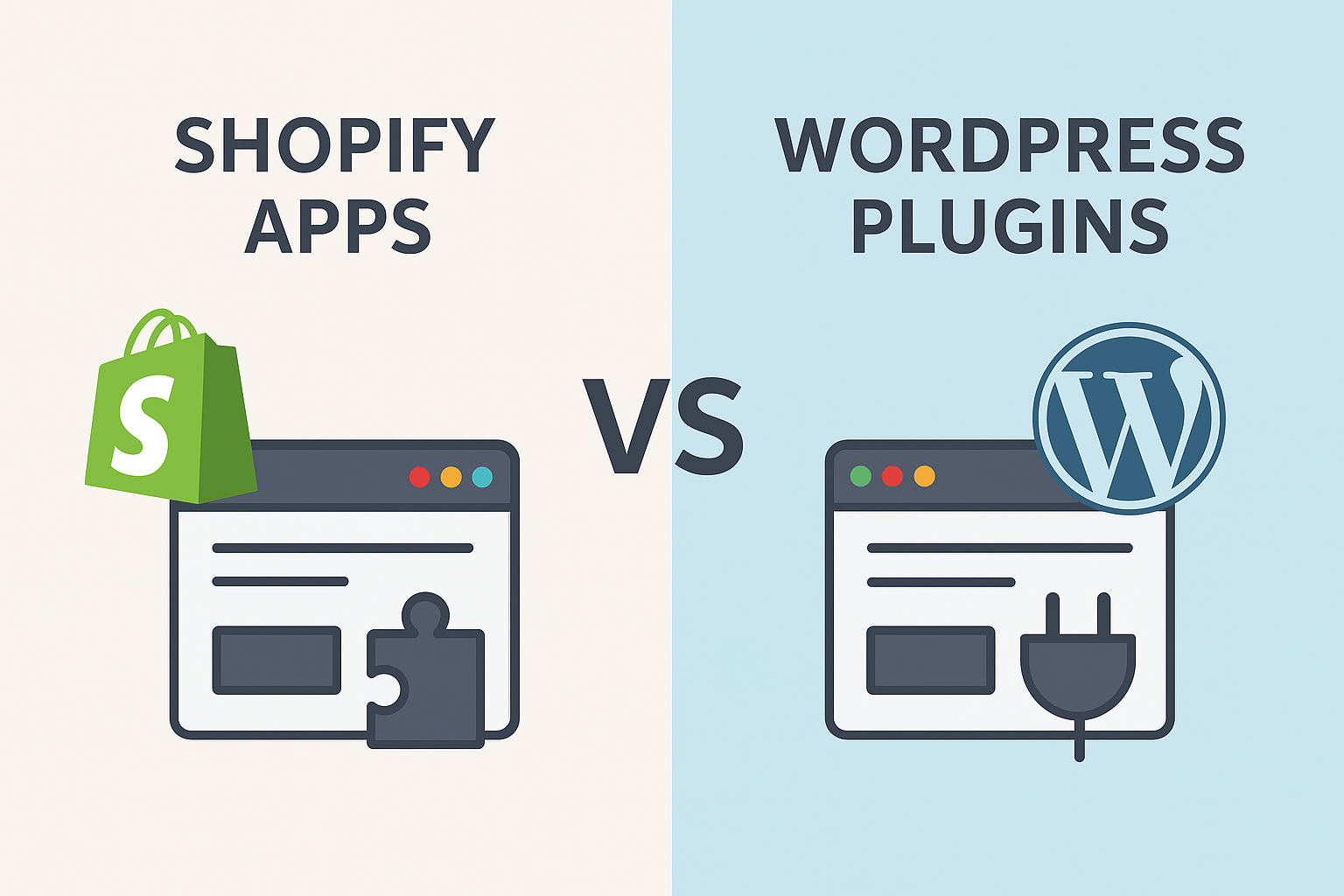
When building websites and online stores, one of the most common conversations I have with clients revolves around functionality. Both Shopify and WordPress provide ways to extend their platforms, but they do so in very different ways. As a developer who works with both, I often compare Shopify apps and WordPress plugins. While both serve the same purpose—adding features beyond the default platform—they differ in philosophy, flexibility, and control.
What They Are
- WordPress Plugins: These are extensions you install directly into your WordPress site. They can add small features, like contact forms, or large systems, like ecommerce functionality through WooCommerce. Plugins run on your hosting environment and integrate directly with your WordPress core files, theme, and database.
- Shopify Apps: These are third-party applications that connect to your Shopify store, often through Shopify’s API. Many apps live outside your store environment, relying on Shopify’s infrastructure and permissions to provide added functionality like email marketing, shipping calculators, or upsell tools.
Control and Flexibility
WordPress plugins generally provide more control because they run directly on your hosting environment. A developer can open up a plugin’s code, customize it, or even write their own. This freedom is one of WordPress’s greatest strengths, but it also places responsibility on the site owner to maintain compatibility, security, and performance.
Shopify apps, on the other hand, are more controlled. You cannot easily dive into the code or customize the app beyond the options provided by the developer. This means less flexibility, but it also removes much of the burden of updates and compatibility issues since Shopify enforces strict standards for apps.
Cost Models
WordPress plugins are often free or available through a one-time purchase with optional premium upgrades. This can make WordPress a cost-effective solution for businesses that need multiple functionalities.
Shopify apps typically work on a subscription model. While this ensures that developers are incentivized to maintain and improve their apps, it also means costs can quickly add up for store owners as they scale.
Performance and Maintenance
Because plugins run on your hosting environment, poorly coded or outdated WordPress plugins can slow down your website or even create vulnerabilities. Choosing and maintaining plugins carefully is crucial.
Shopify apps, since they are often hosted externally, tend to have less direct impact on site performance. However, reliance on third-party servers means you are also dependent on those providers’ uptime and reliability.
Ecosystem and Community
The WordPress plugin ecosystem is vast, with over 60,000 free plugins available on the official repository and countless premium options from independent developers. This variety is a strength but also a challenge, as not every plugin follows the same coding standards.
Shopify apps go through a stricter review process, meaning the quality is usually more consistent. However, the ecosystem is smaller compared to WordPress, and you may find fewer niche solutions.
Which One Is Better?
There is no single winner—it depends on your needs and goals.
- If you want maximum flexibility and control, and you are comfortable managing updates, security, and hosting, WordPress plugins provide endless possibilities.
- If you value ease of use, reliability, and managed infrastructure, Shopify apps may be the better fit, even if it comes at a higher ongoing cost.
Final Thoughts
As a developer, I enjoy working with both systems. WordPress plugins give me the freedom to build highly customized solutions, while Shopify apps allow me to deliver reliable ecommerce features without heavy maintenance. The choice between the two often comes down to a client’s priorities: do they want complete control at the cost of responsibility, or convenience at the cost of flexibility?